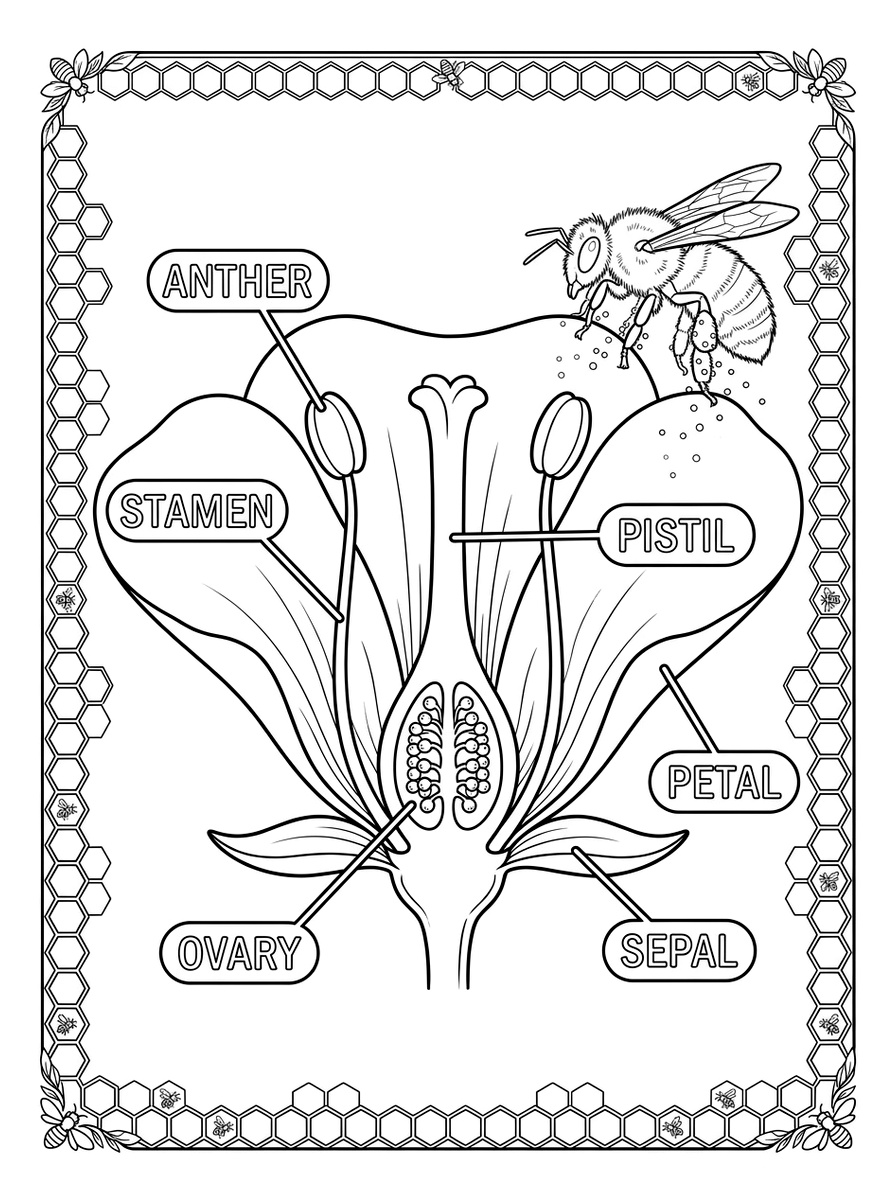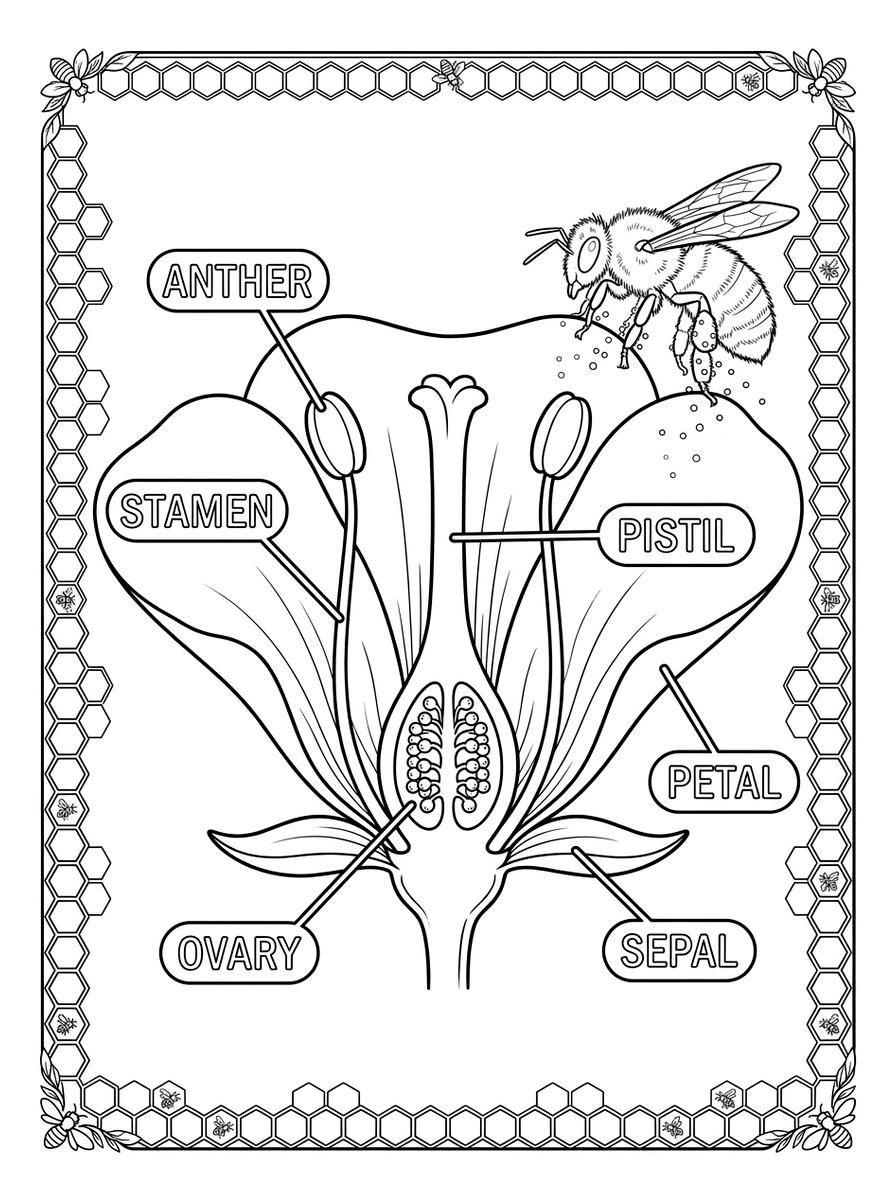
Honeybee Flower Pollination & Petal Cross-Section Anatomy
Inspiring botanical science coloring page illustrating a fuzzy honeybee collecting nectar beside a detailed flower petal cross-section. 300 DPI.
Curated Color Palette & Inspiration
Curated Color Palette
Click any swatch to copy its HEX code for digital art or marker matching💡 Tap any color swatch above to jump right into online coloring with that color.
Coloring & Medium Tips
Crisp black outlines ready for colored pencils, markers, or watercolor. Standard 300 DPI high resolution.
Recommended Paper
120-160 gsm heavy drawing paper for rich vibrant colors
How to Color This Science & STEM Sheet Like a Pro
Follow this simple 4-step shading and layering process to bring depth, vibrant contrast, and clean professional finishes to your artwork.
Color Palette & Lighting Plan
Establish your light source direction and select cohesive base and accent shades.
Apply Soft Base Undertones
Lay down your lightest colors first with light pressure across primary character areas.
Build Depth with Shading & Creases
Layer deeper tones and complementary colors along folds, cast shadows, and edges.
Highlights, Gel Pen & Finishing
Add crisp white gel pen accents to eyes and rims, or burnish highlights with a blender pencil.
Visual STEM Learning, Diagrams & Scientific Inquiry
Combine coloring with interactive learning! Explore fascinating trivia, spark meaningful discussions with kids, and enjoy proven mindfulness benefits.
Fascinating Trivia
- •Color-coding anatomical, geological, or astronomical diagrams improves recall by linking spatial layout to distinct visual colors.
- •Visual notebooks and labeled sketches have been used by legendary scientists—from Galileo to Rachel Carson—to document discoveries.
- •Breaking complex processes like the water cycle or photosynthesis into clear black-and-white stages makes abstract concepts concrete.
Story & Discussion Prompts
- 💬Can you assign one consistent color to each system or stage in this diagram so anyone reading it understands the flow immediately?
- 💬What real-world problem does this scientific phenomenon or clean technology help explain or solve?
Mindfulness & Development
- 🌱Reinforces STEM vocabulary and visual-spatial memory for school science units.
- 🌱Turns passive reading into active diagram labeling and color-coded study.
Best Paper & Coloring Supplies for this Page
Selecting the right paper weight prevents ink bleed-through and ensures vibrant, smooth colors.
Best for wax crayons and colored pencils. Perfect for quick everyday classroom handouts.
Best for water-based markers, gel pens, and brush lettering. Eliminates wrinkling and bleed.
Best for light gouache, watercolor washes, and mixed media art without paper buckling.
Color directly in your browser on iPad, tablets, or PC. Instant undo, custom palettes, and zero print costs.
Frequently Asked Questions
Is this Honeybee Flower Pollination & Petal Cross-Section Anatomy coloring page free to download and print?
Yes, this high-resolution black-and-white coloring sheet is 100% free for personal, classroom, and non-commercial mindful coloring. You can print it directly or download it as an A4 PDF or JPG image without signing up.
What paper should I use for printing this Honeybee Flower Pollination & Petal Cross-Section Anatomy coloring page?
120-160 gsm heavy drawing paper for rich vibrant colors. Standard 80gsm copy paper is suitable for crayons and colored pencils, while 120gsm to 160gsm cardstock or heavyweight drawing paper prevents bleed-through when using alcohol markers, watercolors, or gel pens.
Can teachers, educators, or librarians print multiple copies for students?
Absolutely! Under our Open Educational License, educators and community leaders are warmly permitted to print unlimited paper copies for classroom lessons, daycare centers, library activities, and therapy workshops.
Can I color this science artwork online digitally?
Yes! Click the "Color Online" button on this page to launch our interactive digital coloring canvas. You can pick curated palette colors, fill areas, use custom brush strokes, and save your finished artwork directly to your device.
How do I print this coloring sheet in high resolution without pixelation?
Click the "Download PDF" button to get a 300 DPI print-ready vector-quality PDF document formatted for standard A4 and US Letter sizes with crisp, sharp outlines and balanced margins.
How can I prevent ink and marker bleed-through when coloring?
When using wet media like dual-tip markers or watercolors, place a piece of scratch cardstock underneath your sheet. Choosing our PDF download and printing on matte cardstock (150gsm+) ensures the sharpest lines and zero bleed.